
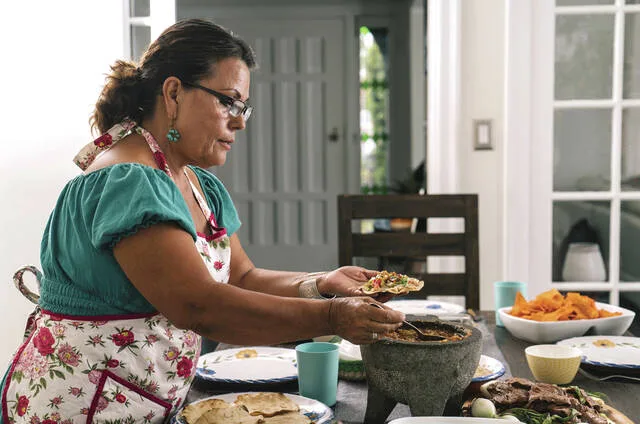


National Hispanic Heritage Month is observed from Sept. 15 to Oct. 15 each year, celebrating the history, cultures and contributions of Latin American countries.
The celebration starts each year on Sept. 15, in conjunction with the independence days of Costa Rica, El Salvador, Guatemala, Honduras and Nicaragua. On the following day, Sept. 16, Mexico celebrates its independence, followed by Chile on Sept. 18 and Belize on Sept. 21.
The early observances of Hispanic Heritage Month date back to 1968 under President Lyndon Johnson, when Hispanic Heritage Week was established. President Ronald Reagan later expanded it into a monthlong celebration in 1988, as it is known today. On Aug. 17, 1988, Hispanic Heritage Month was enacted into law through Public Law 100-402.
The United States observes National Hispanic Heritage Month. Hispanic is an ethnic classification used in the United States to describe people with cultural or ancestral ties to Spain and Spanish-speaking countries, including Mexico, Central and South America, Puerto Rico and Cuba.
According to statistics, the U.S. Hispanic and Latino population exceeds 68 million, making up approximately 20% of the nation’s total population. The Hispanic population is one of the largest and fastest-growing racial and ethnic groups in the United States. Mexicans make up the largest share of the U.S. Hispanic population.
There are also approximately 1.1 million Hispanic veterans in the United States, while 55% of Hispanic adults identify as Catholic.
In the 2014, it was reported in statistics that approximately 1 million Hispanics resided in North Carolina. After English, Spanish is the second-most spoken language in the United States.
States that we know today as Arizona, California, Texas, New Mexico, Nevada and Utah were once Mexican territories, along with parts of Colorado, Wyoming, Oklahoma and Kansas. Those territories were ceded through the Mexican Cession and the Treaty of Guadalupe Hidalgo in 1848, bringing an end to the Mexican-American War.
Hispanics have made their mark in American history with notable figures such as Mel Martinez, who was the first Cuban American elected to the U.S. Senate. He also served as President George W. Bush’s housing secretary.
Cesar Chavez, an American labor unionist and political activist, co-founded the National Farm Workers Association, later renamed the United Farm Workers, to fight for better working conditions and fair pay for agricultural laborers.
Dolores Huerta, a labor leader and civil rights activist, worked alongside Chavez to organize strikes and advocate for social and economic justice.
In 1993, Dr. Ellen Ochoa made history by becoming the first Hispanic woman to travel to space. She later became the director of NASA’s Johnson Space Center.
Hispanic cuisine has made an impact on the American food industry, with staples such as salsa, tortillas, chiles, street tacos and seasonings becoming popular throughout the country.
Texas has the Tex-Mex phenomenon, where Mexican cuisine intertwines with Texan influences. Taco and burrito franchise chains, such as Taco Bell and Chipotle, have also put their own twists on Mexican-inspired cuisine.
Each year, the National Council of Hispanic Employment Program Managers selects a theme for Hispanic Heritage Month. This year’s theme is “Unidos, somos más” (Together, we are more).
Hispanic Heritage month allows a chance for us to look at the history, culture, people and traditions that continue to influence American life.